

What the River Leaves Behind
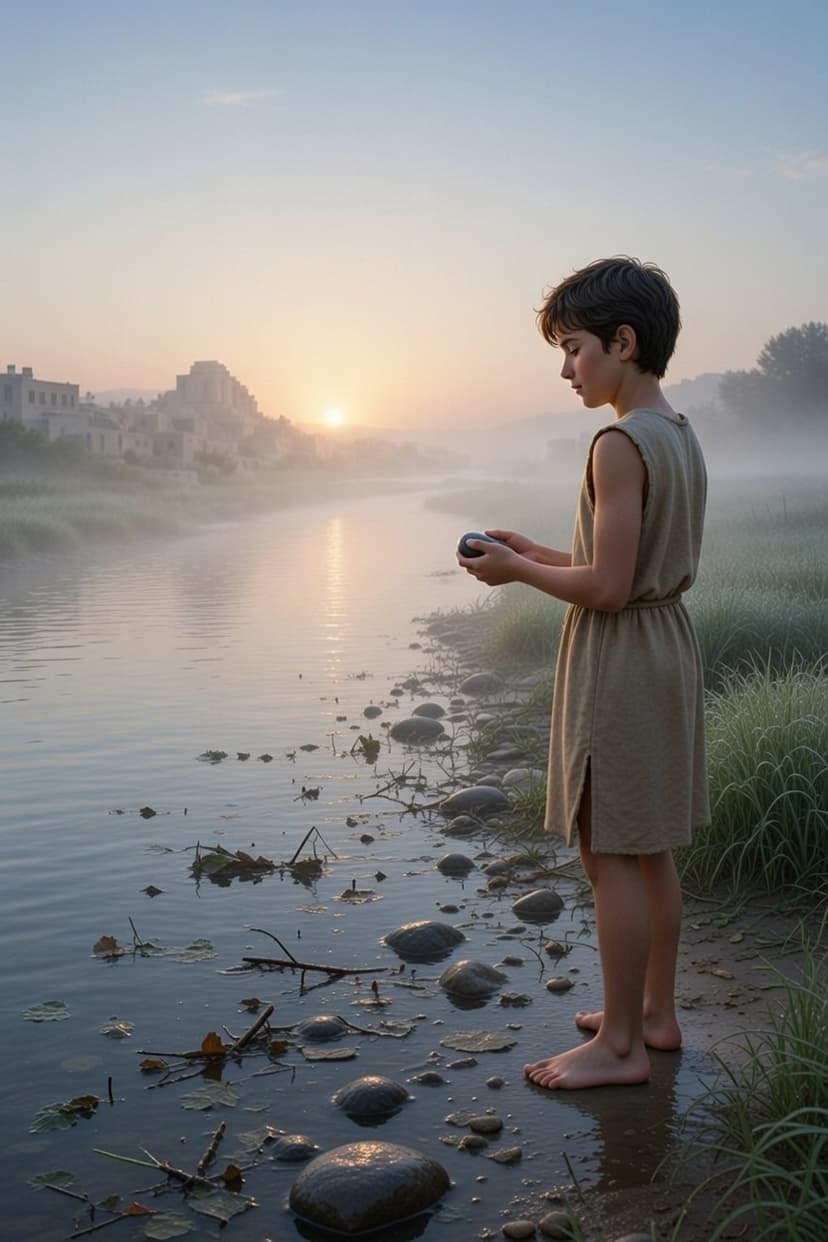
The morning after the storm arrived quietly, as if the river itself wished to rest. A pale mist hovered over the water, softening the edges of the city and blurring the line between land and sky. Tarek woke before anyone else in his household and stepped outside, breathing in the cool air. For the first time in many days, his chest felt light. The river flowed calmly again, its surface smooth and unbroken, as though it had never tested the city at all. Yet Tarek knew better. The river never erased its lessons. It simply carried them forward.
As the city stirred awake, people emerged from their homes and gathered along the banks. Some spoke in relieved voices, others in thoughtful silence. The reinforced clay walls stood firm, marked by dark lines where the water had pressed against them during the night. Fields beyond the city glistened with moisture, ready to grow. There had been loss, and there had been effort, but there had also been success, and that success belonged to everyone.
Tarek joined his father near the canal gates. Together they inspected the channels, checking for cracks or weakness. His father moved more slowly than usual, fatigue visible in his posture, but there was calm in his eyes.
“You did well,” his father said at last.
Tarek looked up, surprised. “I only did what you and Bel-Enna taught me.”
His father nodded. “That is what doing well means.”
Later that day, Bel-Enna summoned Tarek once more. This time, the old scribe’s house felt less like a place of judgment and more like a place of welcome. Sunlight filtered through the doorway, touching the rows of tablets lining the walls.
“I am finishing a record,” Bel-Enna said, handing Tarek a fresh tablet. “This one will speak of these days.”
Tarek knelt beside him, carefully pressing symbols into the clay as Bel-Enna dictated. The words recorded the storm, the rising water, the work of the people, and the strength of the banks. But then Bel-Enna paused.
“There is something missing,” he said.
Tarek hesitated, then spoke softly. “The river did not destroy us because we listened together.”
Bel-Enna smiled. “Yes. Write that.”
As Tarek pressed the final symbols, he felt a quiet pride. This was not a story of one person’s mistake or success. It was the story of a city learning.
In the days that followed the storm and the river’s testing of the city, life in Uruk slowly returned to its familiar patterns, though it never felt exactly the same as before. The market grew loud again as merchants called out prices and argued over weights, their voices rising and falling like waves. The scent of baked bread and dried fish drifted through the streets, mixing with dust and warm air. Children chased one another between doorways, laughing as if fear had never touched the city. Farmers returned to their fields at dawn and dusk, pressing seeds into softened soil with careful hands and renewed hope.
From a distance, everything looked as it always had, but those who lived there could feel the difference beneath the surface, quiet but steady, like a change in the current of the river itself. People spoke more often now, not just to trade or argue, but to ask questions. They talked about the height of the water and the timing of the rains. They compared this season to others they remembered, and to stories passed down from parents and grandparents. At night, voices drifted from doorways as neighbours shared memories of floods long past and lessons learned too late. The river was no longer something that simply existed beside the city. It had become a presence people thought about, discussed, and respected. They remembered because they had learned how easily forgetting could cost them everything.
Tarek noticed these changes everywhere he went. He noticed them in the careful way his father checked the canal gates each morning, running his hand along the clay as though greeting an old friend. He noticed them in the way farmers paused at the riverbank before crossing, studying the water’s movement instead of rushing ahead. Even the children, who once ran close to the edge without fear, now lingered a little farther back, watching instead of daring one another to step closer.
Each evening, Tarek still walked to the river, just as he always had, but his visits felt different now. He no longer spoke to it aloud as he once did, whispering questions or promises into the flowing water. Instead, he watched. He watched how the light changed on its surface as the sun lowered, how the water darkened near the deeper centre and shone pale along the edges. He watched how floating leaves gathered in slow circles near bends in the bank and how small insects skated across the surface without sinking. The river no longer felt like a voice calling him forward, urging him to act. It felt like a teacher who spoke softly, expecting patience and attention rather than quick answers.
Luma often joined him during these quiet evenings. She would sit nearby, gathering smooth stones and skipping them across the water, counting how many times they bounced before sinking. Sometimes they spoke. Other times they sat in comfortable silence, listening to the sounds of the city settling into night.
“You used to act first,” Luma said one evening, breaking the quiet as she tossed another stone into the river. “Before thinking.”
Tarek smiled faintly. “I know.”
“And now?” she asked, glancing at him.
“I still act,” he replied. “Just not alone.”
She nodded, as if that answer satisfied her. “That is better,” she said simply.
One afternoon, while the sun still sat high in the sky, Tarek found himself near the river with a group of younger children. They were laughing and daring one another to step closer to the water, edging toward a place where the bank sloped steeply. Without thinking, Tarek moved forward, placing himself between them and the river.
“Not there,” he said gently. “The ground is soft.”
One of the children frowned. “How do you know?”
Tarek knelt and pressed his hand into the earth, showing how easily it crumbled beneath his fingers. “The river leaves signs,” he said. “You just have to learn how to see them.”
The children watched with wide eyes, suddenly more interested in the ground than the water. They stepped back without complaint, and Tarek guided them toward a safer spot. As they ran off, he remained where he was, surprised by what he felt. There was no pride in stopping them, no rush of excitement. There was only calm understanding. In that moment, he realised something important. The river no longer felt like something he needed to follow or control. It felt like a companion walking beside him, shaping his choices without demanding obedience, teaching through presence rather than force.
As the season drew toward its end, preparations for harvest began. The fields stood tall and green, heavy with promise. One evening, a small gathering was held near the temple, not a celebration, but a moment of reflection. People gathered quietly, standing in loose circles beneath the fading light. Bel-Enna stood at the front, holding a finished clay tablet carefully in both hands.
“This record will remain,” he said, his voice steady despite his age. “Long after we are gone. It will remind those who come after us that the river gives life, but only to those who respect it.”
He spoke of the storm, of the rising water, and of the work done by many hands. He spoke of patience, planning, and shared responsibility. When his gaze rested briefly on Tarek, the boy lowered his head, not in shame as he once had, but in understanding. He knew now that learning did not erase mistakes. It transformed them.
That evening, after the gathering ended and people returned to their homes, Tarek walked to the riverbank alone. The sun dipped low, painting the water in shades of gold and deep orange. The city behind him hummed softly with life, but here, at the edge of the river, everything felt still.
He stood there for a long time, hands at his sides, breathing slowly. This was the last quiet moment before the harvest would begin, before the city would grow busy again with work and celebration.
“I will keep listening,” he whispered at last. “And I will remember.”
The river flowed on, unchanged yet never the same, carrying his promise forward along its endless path, along with the memory of a boy who learned that wisdom, like water, must be guided with care and shared with others if it was to truly give life.