

Gone
The boat was gone on a Tuesday morning and nobody could explain it.
Not where it had gone. Not how. Not when exactly, because the harbour master had done his last check at nine the previous evening and it had been there, tied to its mooring on the far side of the jetty, same as it had been every night for eleven years. By six the next morning it was not there. The mooring rope was still tied to the cleat on the jetty. The other end, the end that should have been knotted through the bow ring, hung in the water.
It had not been untied. It had been cut.
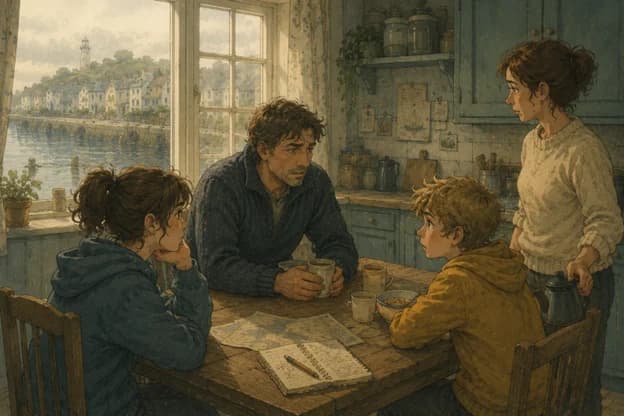
Sera found out at breakfast when her father came in from the harbour with the look on his face he reserved for things that were genuinely wrong, not annoying-wrong or inconvenient-wrong but actually wrong in a way that required thinking about. He sat down at the kitchen table and said the Marianne was gone and their mother put down the coffee pot very carefully and their younger brother Ned looked up from his cereal and said what do you mean gone.
"Gone," their father said. "Not there. Disappeared."
"Boats do not disappear," Ned said. He was ten and took a literal approach to most things.
"This one did," their father said.
The harbour outside the kitchen window looked wrong without it. That was the thing about a familiar object in a familiar place, you did not notice how much you relied on it being there until it was not. The Marianne's usual mooring was just a stretch of empty water now, the rope end trailing.
Sera was thirteen and had been coming to this harbour village every summer her whole life and the Marianne was the family boat, a thirty-two foot sailing ketch that her grandfather had bought in 1987 and her father had maintained every year since he died. It was not a valuable boat in the way that some boats were valuable. It was valuable in the way that things are valuable when they have been in a family for a long time and carry the weight of everyone who ever sailed in them.
"Who would take it?" Sera asked.
"That," her father said, "is what I intend to find out."
But by the end of the day the police had spoken to everyone in the harbour and found nothing, and the coastguard had done a search of the surrounding waters and found nothing, and the harbour master had checked his camera footage and found that the camera covering that section of the jetty had stopped recording at eleven forty-two the previous night and started again at five seventeen in the morning, a gap of five hours and thirty-five minutes, and in between those two times the Marianne had gone.
"Camera malfunction," the police said.
"Convenient," Sera said, to Ned, privately, on the harbour wall that evening.
"Very," Ned agreed.