

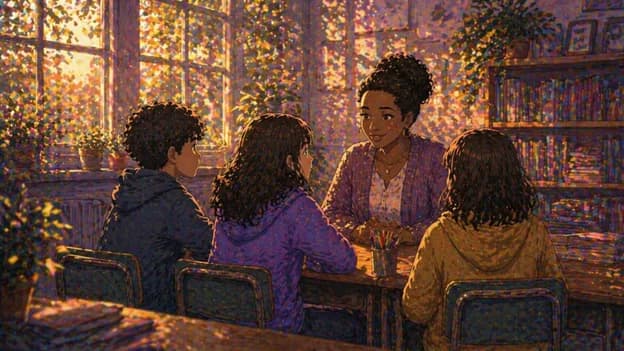
Mrs. Okafor
Mrs. Okafor lived four streets from the bridge on the same road as the waterworks. Her garden had taken six inches of water and her shed had floated three feet to the left and she had opinions about this that she had been sharing with the community group at length.
She opened the door and looked at the three of them on her step with the assessing expression of someone who has been a primary school teacher for thirty years and can read a group of children like a large-print book.
"Well," she said. "You had better come in."
They sat in her front room, which smelled of good coffee and had more plants in it than Zara had ever seen in a domestic space, and Mrs. Okafor sat opposite them with a cup of tea and waited.
Zara kept her hands in her lap and her face still. Kofi sat forward slightly with his elbows on his knees, the way he sat when he was paying maximum attention.
Petra told her story. Zara watched her do it, watched her pick the true pieces carefully and arrange them into something that made sense without being the whole truth. Her parents' news. The need to be somewhere high and quiet. The shock of the storm. The arms raised, trying to get her bearings, which in the photograph looked deliberate but had been instinctive.
"I know it flooded people's gardens," Petra said. She met Mrs. Okafor's eyes when she said it and did not look away. "I am really sorry about that. About your shed. I would not have been up there if I had known."
Mrs. Okafor looked at her for a long time. Her tea cooled in her cup.
"How old are you?" she said.
"Thirteen," Petra said.
"And your family is moving."
"End of term."
"And these two came with you today," Mrs. Okafor said, looking at Zara and Kofi. "To explain."
"It was my idea," Kofi said. "Petra did not want to come. She thought nobody would listen."
Something moved across Mrs. Okafor's face. It was not pity exactly. It was the expression of someone who has seen a particular thing before and recognises it.
"People often do not listen," she said, "when they have already decided what story they are telling themselves. The poster made a story. Stories are sticky." She set her cup down. "But they can be unstuck. With the right counter-story and a credible source."
"Are you a credible source?" Kofi asked.
"Kofi," Zara said.
"It is a fair question," Mrs. Okafor said, not unkindly. She almost smiled. "Yes. I am on the committee. I have lived on this street for twenty-two years. What I say carries weight in this neighbourhood." She looked at Petra again. "You were a child who had just had bad news, standing on a roof in a storm, trying to get your bearings. That is the story?"
"That is the story," Petra said. Her voice was steady.
Mrs. Okafor nodded slowly. "I will make some calls this evening," she said. "And post something to the group. The posters will come down." She stood, which meant the conversation was over. "Next time you need somewhere high to think, there is a perfectly good church tower two streets from here whose vicar is a friend of mine and who takes in stray children on a regular basis. It is safer than the waterworks roof."
"Thank you," Petra said. She said it like she meant the whole afternoon, not just the last sentence.
"Thank your friends," Mrs. Okafor said. "They are the ones who came with you."